Grease Trap vs. Grease Interceptor: What Each One Does
Both keep grease out of the sewer, and both do it only until they're full.
October 20, 2026 · 4 min read
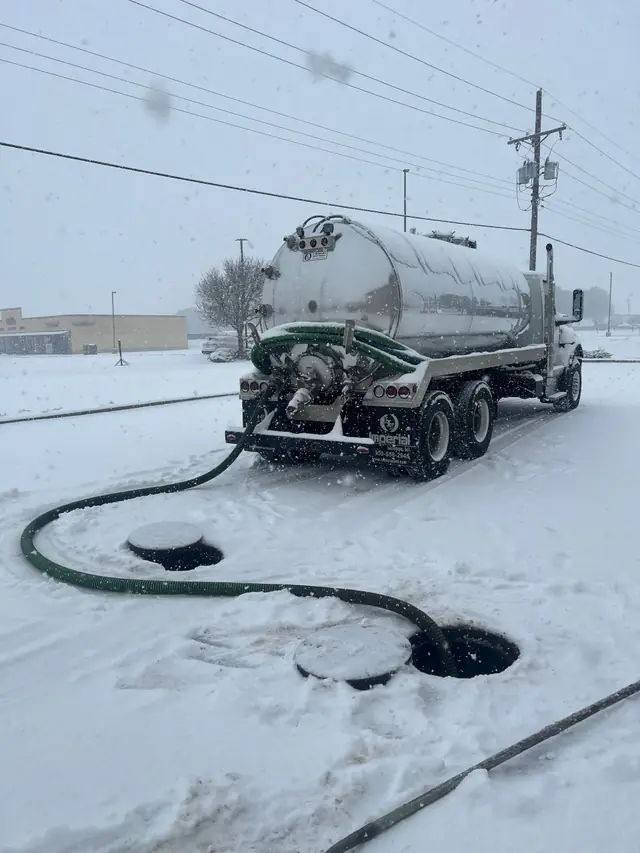
People use the words grease trap and grease interceptor as if they mean the same thing, and in a restaurant kitchen they often do. But the two terms usually describe different pieces of equipment, and knowing which one you have changes how you plan for it. More important is the thing they share: neither one gets rid of grease. They hold it. Somebody still has to haul it out.
The grease trap
A grease trap is the smaller unit, typically a box that sits inside the kitchen near the sinks it serves, often under a pot sink or dish station, sometimes recessed into the floor. Wastewater runs in, slows down, and the lighter fats, oils and grease rise to the surface while food solids settle to the bottom. Cooler, cleaner water in the middle flows out through an outlet and on to the building's drain line.
Because these units are small, they fill quickly. A trap under a busy dish station can be full of grease and solids within weeks. They are also the type most likely to be cleaned by staff, with a lid pulled, a scoop and a bucket. When that's done well it helps, but it rarely gets everything, and it leaves the question of where the waste goes.
The grease interceptor
A grease interceptor is the larger version, usually a big tank buried outside the building, under a parking lot or a strip of landscaping, with a manhole lid at the surface. It serves the whole kitchen, sometimes several tenants, and holds far more volume. That extra capacity buys more time between pump-outs, but not unlimited time. A busy kitchen can still fill one in a few months.
Interceptors are pumped with a vacuum truck, not a bucket. The crew opens the manhole, pumps out the grease on top and the sludge on the bottom, and checks the inlet, outlet and baffles while the tank is empty. That inspection is where small problems get caught before they turn into big ones.
What both of them do not do
Here is the part that surprises people. A trap or interceptor does not digest grease, dissolve it, or make it disappear. It slows the water down long enough for the grease to separate and then it stores that grease. Every pound that goes in stays in until it is pumped. That's why the service interval matters so much: the unit works well right up until the day it's full, and then it doesn't work at all.
What happens when it fills
A full trap or interceptor stops separating. The incoming water has nowhere to slow down, so the grease gets carried straight through with it into your building's lines and eventually the city sewer. You tend to see the effects in a predictable order:
- Odors first. Old grease and food waste go sour and the smell works its way into the kitchen, the back hall or the parking lot.
- Slow drains next. Grease coats the inside of the pipes downstream and narrows them, so sinks take longer to empty.
- Then backups. A line that has hardened with fat finally closes, and wastewater comes up through the lowest drain, which is usually a floor drain in the kitchen.
- Finally, trouble with inspectors. Health and environmental agencies check grease control equipment, and a unit that's overflowing or overdue on its records can lead to fines, failed inspections or a shutdown, depending on your local rules.
Notice that the first three are problems you notice yourself, and the last is a problem someone else notices for you. It's far better to be on a schedule than to learn which one you hit first.
How to tell which one you have
Look at where the unit is and how big it is. A rectangular steel or plastic box under or beside a sink is a trap. A round or square manhole cover in the pavement outside the kitchen usually marks an interceptor. If you're not sure, your building plans or the landlord can tell you, and a service crew can identify it on the first visit. Some kitchens have both: small traps at individual fixtures and a larger interceptor outside.
It's worth knowing because the care differs. A small indoor trap may need attention far more often than an outdoor interceptor, and the two are not interchangeable in a kitchen that has outgrown its original equipment. If your menu has expanded since the trap went in, it may simply be too small now.
Practical habits that help either one
- Scrape plates and pans into the trash before they go near a sink.
- Keep sink strainers in place and empty them in the trash, not down the drain.
- Never pour fryer oil down a drain. Let it cool and send it to a rendering container.
- Don't run the garbage disposal on greasy scraps if the kitchen has one.
- Keep a dated service log and look in the trap between visits.
None of these habits replaces pumping. They stretch the time between pump-outs and keep the trap from filling with solids that don't need to be there.
Getting yours serviced
American Waste Removal pumps both traps and interceptors for commercial kitchens, restaurants and food service facilities, and we can set up a preventive maintenance schedule so it stops being a surprise. If yours is already backing up, call the 24/7 line at (505) 344-0177.
American Waste Removal, (505) 344-0177
Call (505) 344-0177More articles
How Often Does a Commercial Grease Trap Need Pumping?
Every one to six months is the usual range, and where your kitchen lands depends on what goes down your drains.
Hydro-Jetting vs. Snaking: Which Does Your Drain Need?
A snake pokes a hole through a clog. A jetter scrubs the pipe wall, and a camera tells you which one you need.